
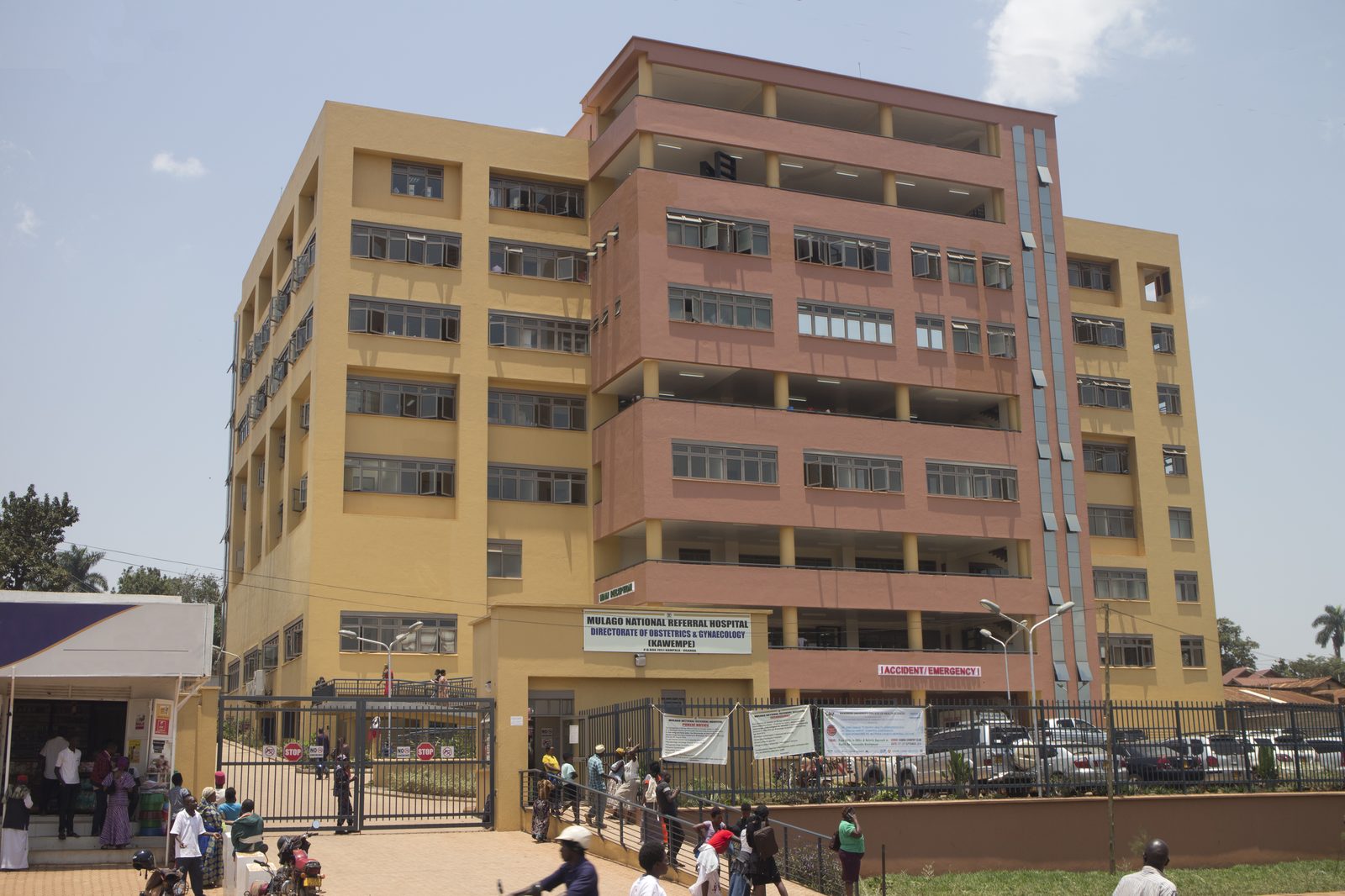
Kawempe General Hospital, Kampala, Uganda

PrevaSense

Catching pre-eclampsia early, before it costs a mother or her baby their life.

We build affordable, wearable screening technology so pregnant women across Uganda can monitor their risk of pre-eclampsia at home, without the cost or distance of a clinic visit.

Our Mission

Using Early Detection to Facilitate Timely Care

PrevaSense exists to close the early-detection gap that lets pre-eclampsia go unnoticed until it becomes a life-threatening emergency. We design low-cost, non-invasive monitoring devices that let women track their risk over the course of a pregnancy, flag warning signs early, and get to care in time.

Our goal is simple: fewer maternal complications and deaths, fewer fetal and neonatal complications and deaths, and more pregnant women who feel informed and in control of their own care.

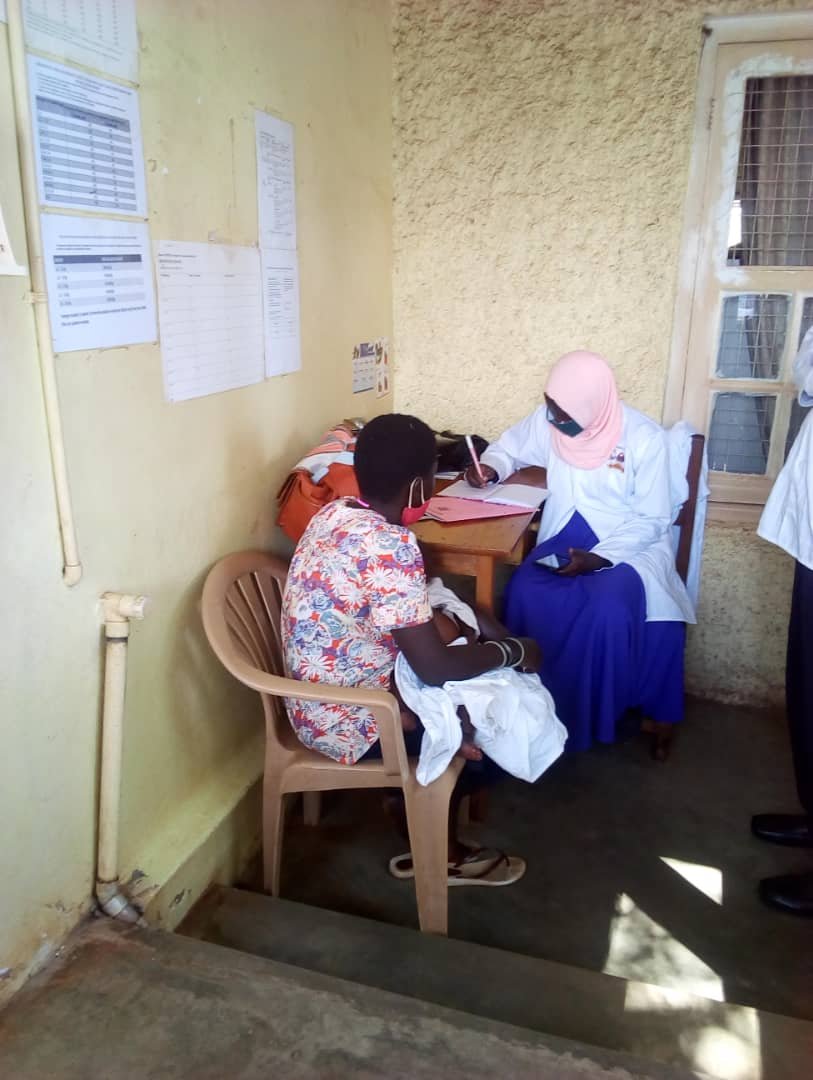
A health worker consults with a mother at a clinic in Uganda
A health worker consults with a mother at a clinic in Uganda — the kind of routine, accessible care PrevaSense wants every mother to have.

The Problem

Pre-eclampsia is a leading, and largely preventable, killer of mothers and babies.

Pre-eclampsia, a pregnancy complication caused by the degradation of blood vessels, is one of the leading causes of maternal and newborn death worldwide. Its burden falls hardest on women with the least access to consistent antenatal care.

Scale

500,000+

fetal & newborn deaths, worldwide, every year

Mustary 2024

76,000

maternal deaths, worldwide, every year

Mustary 2024

25%

of maternal deaths in Uganda

Nakimuli 2025

189

deaths per 100,000 births, Uganda

UDHS 2022

Existing Solution

62%

reduction in preterm pre-eclampsia

Rolnik 2017 (ASPRE)

Early identification works. In the landmark ASPRE trial, screening pregnant women for pre-eclampsia risk and starting low-dose aspirin for those flagged high-risk cut preterm pre-eclampsia by more than half. The clinical solution already exists — what's missing in many settings is a practical, low-cost way to identify who is at risk early enough to act.

The Gap

28%

of women in Uganda skip antenatal care

Bhutada 2024

Early screening works, when it happens. But for the roughly 3 in 10 rural Ugandan women who can't complete the recommended course of antenatal visits, the warning signs of pre-eclampsia often go undetected until the condition is severe. PrevaSense is building the tools to close that gap, so that risk monitoring doesn't stop at the clinic door.

Our Devices

Two devices, one goal: risk monitoring women can use anywhere.

PrevaSense is developing a pair of complementary screening devices designed for accuracy, affordability, and ease of use in low-resource settings.

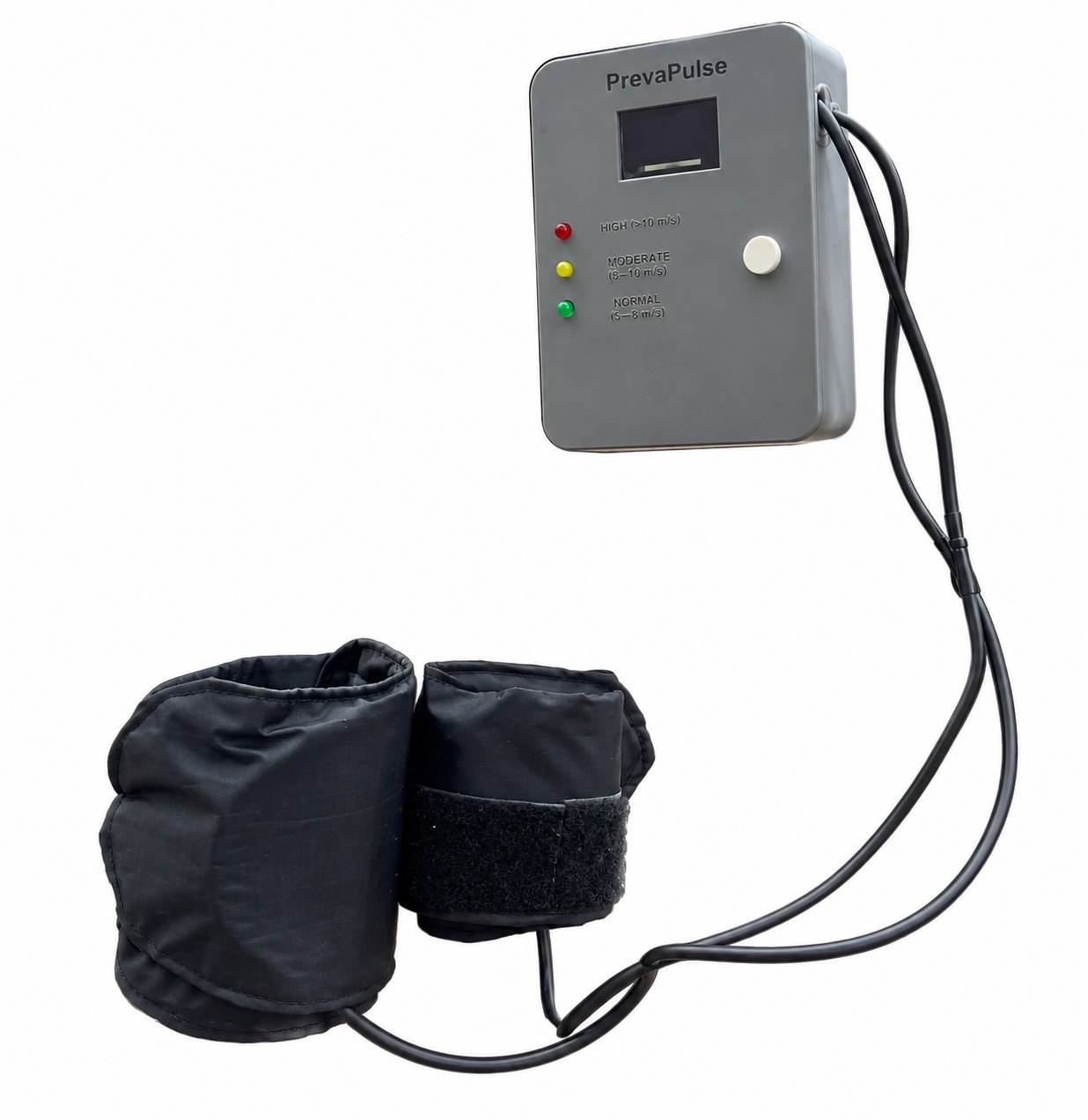
PrevaPulse device with two arm wraps and an OLED display showing HIGH, MODERATE, and NORMAL risk LEDs

PrevaPulse

Portable, non-invasive pulse wave velocity monitoring to support early pre-eclampsia risk assessment

PrevaPulse is a portable, non-invasive device being developed to support early assessment of pre-eclampsia risk in pregnant women.

How It Works

  • Two separate, unequal wraps positioned over the brachial and radial arteries on the same arm
  • Force-sensitive resistor (FSR) sensors detect the pulse wave at both sites
  • The processing unit calculates pulse wave velocity from the pulse transit time across a fixed distance of 150 mm
  • Result shown on an OLED screen, with green, yellow, and red LEDs giving a simple three-level risk indication

Designed for use by nurses and midwives, PrevaPulse aims to make arterial-stiffness assessment more accessible in antenatal clinics and low-resource healthcare settings.

The device is currently at the functional-prototype stage and has undergone preliminary benchtop testing but has not yet been clinically validated.

Learn more
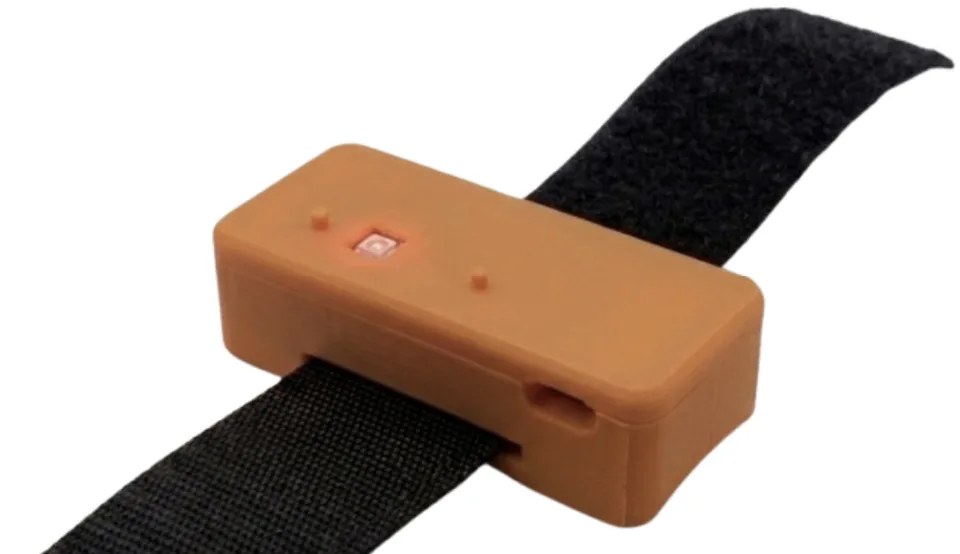

MamaPulse wrist-worn device with velcro strap and lit sensor indicator

MamaPulse

Wrist-worn pulse wave velocity monitoring for continuous, independent pre-eclampsia risk assessment

MamaPulse is a wearable, non-invasive device being developed to support continuous, independent assessment of pre-eclampsia risk in pregnant women.

How It Works

  • Two PPG sensors positioned under velcro straps on the wrist, spaced a fixed 60 mm apart
  • Sensors detect the pulse waveform at each site; onboard firmware calculates pulse wave velocity from the transit time between the two pulses
  • Result shown on an OLED screen, which also displays a history of past readings
  • An onboard LED gives a simple Green, Yellow, or Red risk level

Designed for use by pregnant women at home, MamaPulse aims to make pre-eclampsia risk monitoring accessible without the cost or distance of a clinic visit, while also giving clinicians a longitudinal risk history at a patient's first appointment.

The device is currently at the functional-prototype stage: it has passed benchtop testing for battery life, drop durability, weight, compactness, electrical safety, data storage, and ease of use, but its pulse-wave-velocity algorithm cannot yet reliably calculate risk accurately enough for clinical screening, and MamaPulse has not yet been clinically validated.

Learn more

Meet the Team

The founders behind PrevaSense.

Bengi Rogers

Bengi Rogers

Co-Founder

Makerere University

Lucas Alexis

Lucas Alexis

Co-Founder

Duke University

Najidiyah Hood

Najidiyah Hood

Co-Founder

Makerere University

Magoba Priscilla

Magoba Priscilla

Co-Founder

Makerere University